ServicesWhole-house carbon filtration
Whole-House Carbon Filtration in Dallas
We put a carbon filter on the main water line so every tap, shower and appliance gets water without the pool smell. Before you pick a system, we show you the carbon choices, what each one handles and what it costs to keep running.
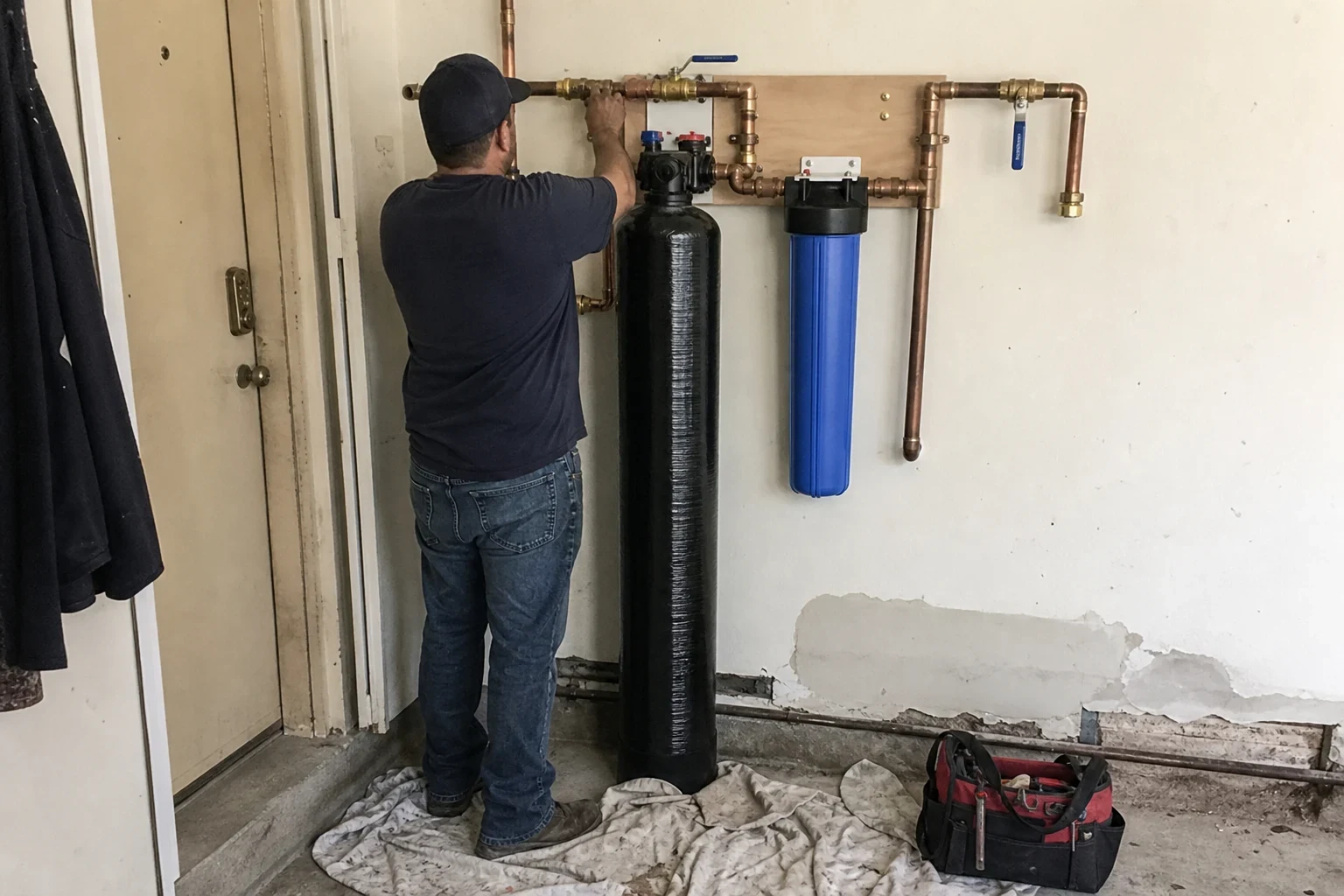
How carbon treats water at every tap
Dallas adds a disinfectant to its water so it stays clean on the long trip through the pipes. That part is good. What is left over can show up as a taste or smell in coffee, ice and a hot shower. As water moves through a bed of carbon, those compounds stick to it and stay behind before the water reaches your fixtures.
A whole-house setup is a tall tank or a large cartridge housing tied into the line where water enters your home. Every faucet and appliance after that point gets treated water. An under-sink reverse osmosis unit is a different tool. It cleans water at one kitchen faucet for drinking and cooking.
Carbon is not one product. The type of carbon, how much of it you have and how the tank is built all change what it removes and how long it lasts. Most of our job is matching those pieces to your water and the way your family uses it.
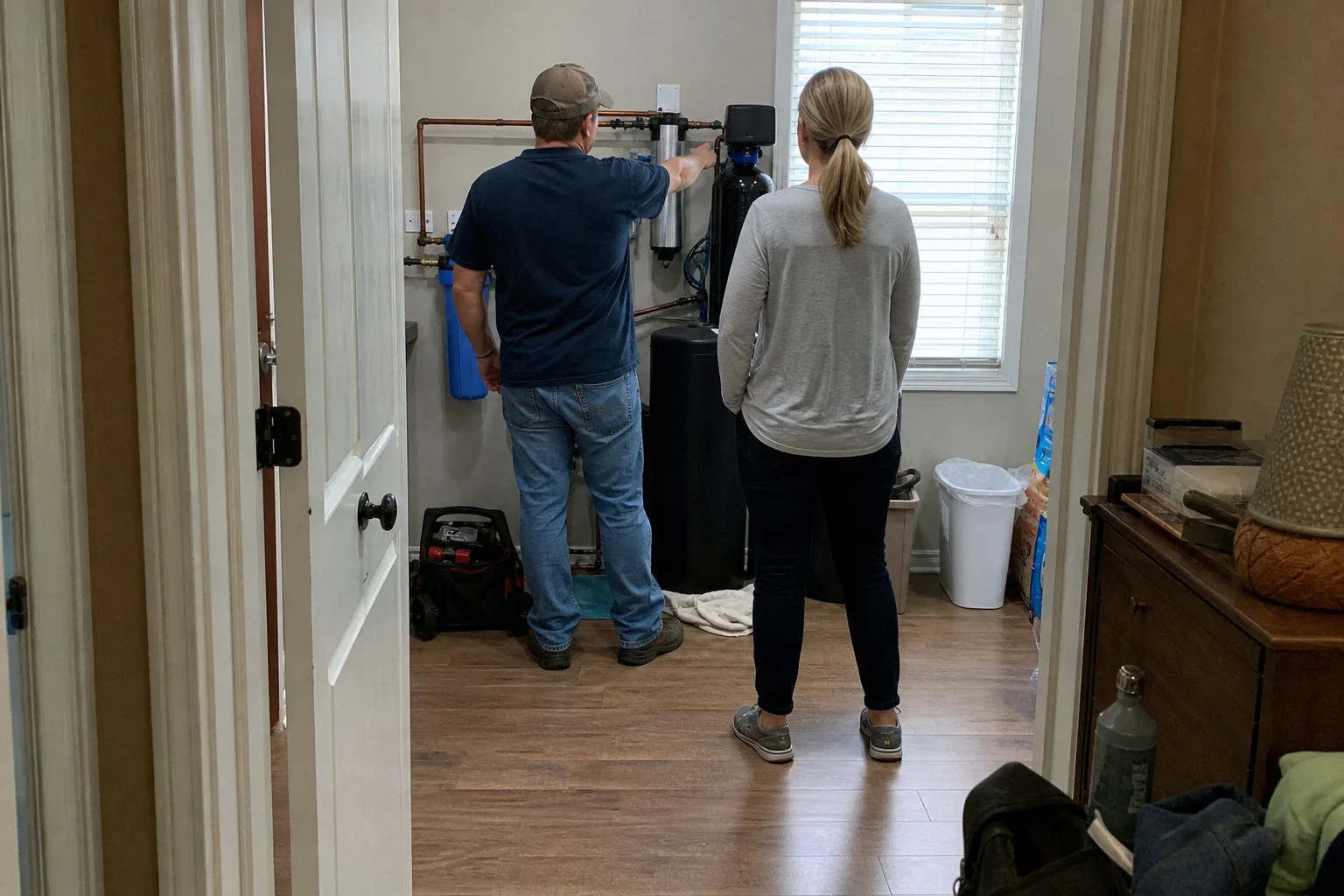
Carbon types and parts we work with
- 01
Standard activated carbon
Granular carbon, often made from coconut shell, works well on free chlorine and common taste and odor. It is the lower-cost choice and a good fit when chlorine is the only complaint.
- 02
Catalytic carbon
This carbon is treated to break down chloramine, which plain carbon handles slowly. It costs more per tank. If your supplier uses chloramine, this is usually the right media, and we check that before we quote.
- 03
Backwashing or upflow tanks
A backwashing tank uses a control valve to flush and loosen the bed on a schedule, and it needs a drain nearby. An upflow, no-backwash tank skips the valve and drain. Each has trade-offs on cost, space and media life, and we lay them out side by side.
- 04
Sediment prefilter
A low-cost cartridge sits in front of the carbon tank and traps sand and fine debris before they reach the bed. Changing that cartridge now and then is far cheaper than replacing carbon that got fouled early.
- 05
Bypass valve and shutoffs
The bypass lets your home stay on water while the filter is being serviced. A shutoff on each side turns a cartridge swap into a few minutes of work.
Questions about Whole-house carbon filtration?
Call(214) 225-7594Signs a carbon system is worth a look
Pool smell after a shower
Steam carries chlorine off hot water and fills the bathroom with it. A filter at the kitchen sink does nothing for that.
Coffee and tea taste off
Chlorine flattens the taste of drinks and leaves a bite in ice cubes.
Pitcher filters at every sink
If you are buying cartridges for three faucets, one system at the main line may cost less over time.
Seasonal earthy taste
Water drawn from area lakes can pick up a musty or earthy taste some summers. Carbon handles many of these taste compounds well.
You just found out about chloramine
If your old filter worked fine and the taste came back, the disinfectant may be the reason. That is a sign you need catalytic carbon, not just a new cartridge.
Steps of the job
- 1
Inspect and test
We visit, find where the main line comes in, and test for chlorine and chloramine. If you have other concerns about your water, we may recommend full water testing before you spend anything.
- 2
Choose the carbon and tank
You see two or three setups, each with its carbon type, tank size and upkeep. The written estimate lists every part.
- 3
The install
We turn off the main and connect the system close to where the line enters the house, usually in the garage or on an outside wall. We cover the floors and keep the work area neat. In most homes the water is off for part of the day, not the whole day.
- 4
Rinse and confirm
Fresh carbon gives off fine dust, so we rinse the bed until the water is clear. After that we test the treated water, look for leaks and show you how the bypass works.
What sets the cost of a carbon system
Two homes can end up with very different numbers. The media you pick and how easy your main line is to reach make the biggest difference. We give you a figure only after we have seen the job and tested your water.
- Type of carbon
- Catalytic carbon costs more than standard carbon. It is often worth it if your water carries chloramine, since plain carbon can wear out fast against it.
- Tank size and flow
- More bathrooms mean more water at once. A bigger tank keeps pressure up and lasts longer between media changes, but it costs more up front.
- Backwash or no backwash
- A backwashing valve adds cost and needs a drain and outlet. An upflow tank is simpler but may need new media sooner.
- Plumbing access
- An easy line in the garage goes quick. A main line buried under a slab or tucked behind finished walls takes more labor and fittings.
- Ongoing upkeep
- Prefilter cartridges and eventual media replacement are part of the real cost. We cover that in our filter replacement and maintenance service and tell you the schedule up front.
Questions about whole-house carbon
Will a carbon filter soften my water?
No. Carbon removes taste, smell and many chemicals, not the minerals that cause hardness. If you see scale or spots, we test hardness first. Only if the numbers call for it do we talk about a water softener.
Does whole-house carbon remove lead?
Not reliably. Lead usually comes from old pipes or fittings inside a house, after the main line. For drinking water we point people to an under-sink reverse osmosis unit, which is built for that job.
Will it lower my water pressure?
A tank matched to your home should not leave you with a weaker shower. When flow does fall off, the cause is most often a tank that was undersized from the start or a prefilter cartridge packed with debris. We size the system to how many bathrooms you have and show you how to check the prefilter yourself.
How often does the carbon need replacing?
That comes down to your daily water use and what the carbon is pulling out. A full tank of media outlasts a cartridge housing by a wide margin, and catalytic carbon wears more slowly against chloramine. We give you an expected schedule for your system and check the treated water when we come back for service.
I have rust stains and grit. Is carbon the answer?
Usually not by itself. Iron and grit clog carbon and shorten its life. Our iron and sediment filtration goes in ahead of the carbon when the water needs it.
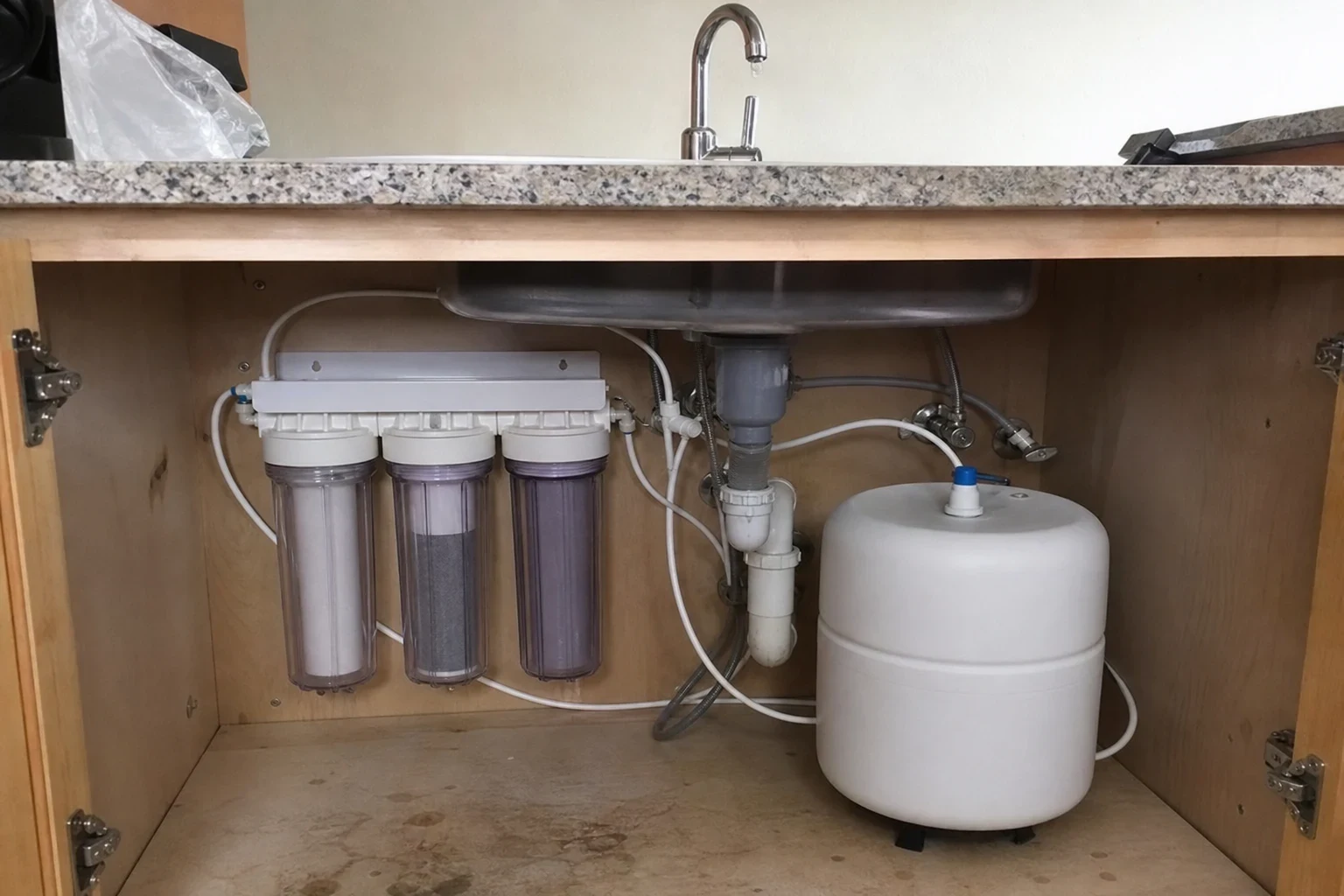
Find out which carbon fits your water
We will test for chlorine and chloramine, look at your main line and walk you through the options in plain terms. You decide with the facts in front of you.