ServicesWater softeners
Water Softener Installation in Dallas, Backed by a Real Hardness Reading
First we measure the minerals in your water. Then we decide together. If the reading is high enough, we size a softener to your home and explain the resin, tank, valve and salt choices. If it's low, you'll hear that from us and keep your money.
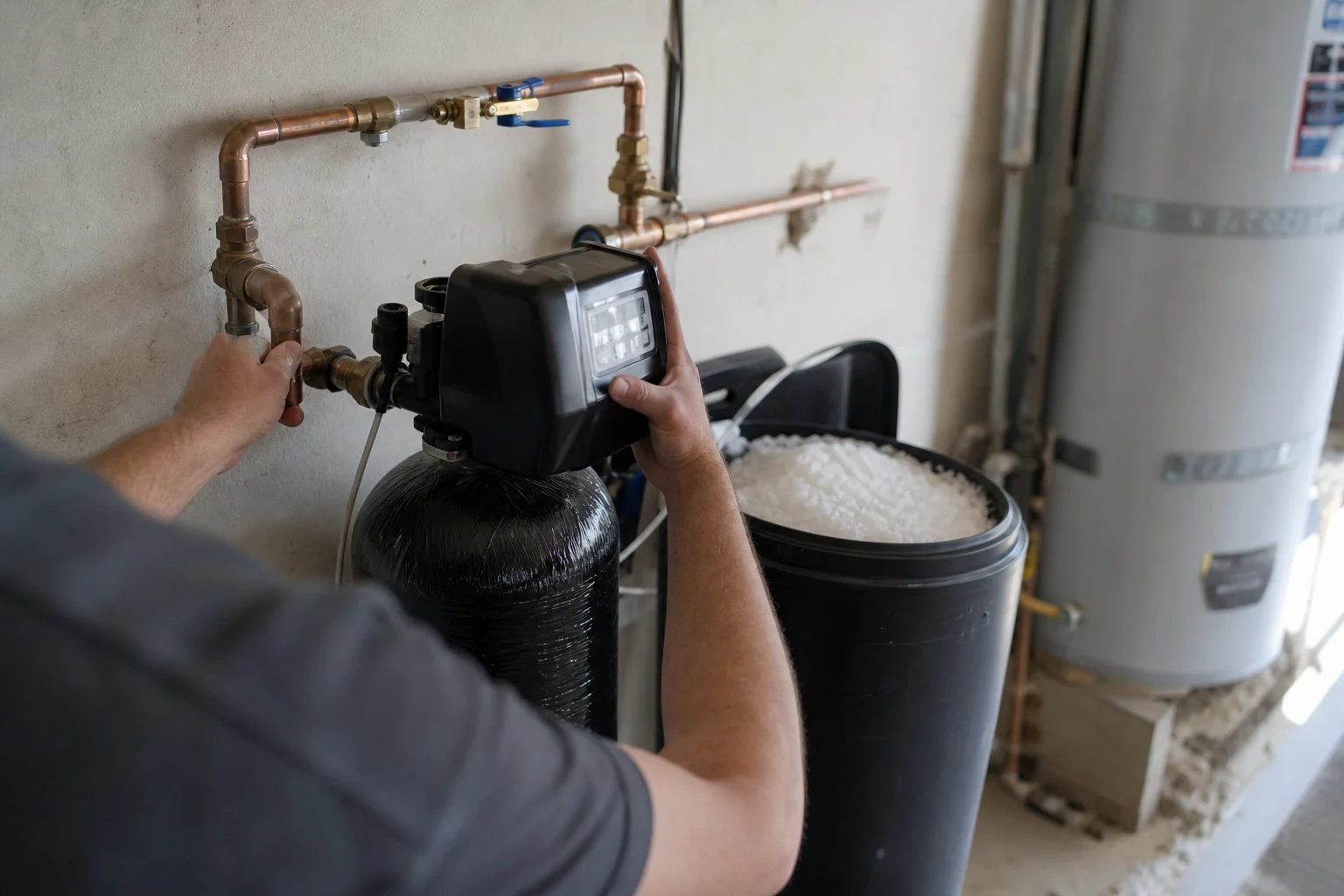
A softener is the right call only when the test says so
Hard water carries calcium and magnesium. Heat them and they drop out as scale inside your water heater, on shower glass and in faucet aerators. Inside a softener, a bed of small resin beads grabs those minerals and trades them for sodium or potassium before the water reaches your taps.
Dallas tap water comes from area lakes and reservoirs, and its hardness shifts with the source and the season. So we read it at your tap instead of guessing. Some homes see enough scale to justify a softener. Others are better served by whole-house carbon filtration or simply a cleaner water heater.
When a softener does make sense, the choices inside it matter more than the brand on the tank. We explain each one so you know what you're paying for.
What goes into a softener install
Hardness and iron reading
Our first step is a grains-per-gallon hardness number, plus a look for iron, because iron coats and clogs resin beads. That reading tells us if a softener belongs in your home at all, and if so, what size.
Resin choice
Standard 8% crosslink resin works for many setups. On chlorinated city water, 10% crosslink resin holds up longer because disinfectants slowly break the beads down. Fine-mesh resin is an option when some iron is present.
Tank and brine tank
Mineral tanks are fiberglass-reinforced polyethylene, which won't rust and handles line pressure well. We size the tank to your household's daily use so it isn't regenerating every night.
Metered control valve
We use metered valves that regenerate based on gallons used, not a fixed timer. That saves salt and water compared with older clock-style valves.
Bypass and plumbing
A bypass lets you take the softener out of the loop for service while water keeps flowing to the rest of your home. Where the layout allows, we keep the kitchen cold line or an outdoor spigot on hard water.
Setup and walk-through
We program the valve to your measured hardness, run a first regeneration and show you how to add salt and read the display.
Clues that minerals are building up in your home
Scale on faucets and showerheads
A white, chalky ring that keeps coming back a few weeks after you scrub it is usually calcium.
A noisy water heater
Popping or rumbling in a tank heater often means scale has settled on the bottom.
Spotty dishes and glass
Cloudy film after the dishwasher runs, even with rinse aid, is a common hard-water sign.
Thin lather in the shower
Calcium and magnesium tie up soap before it can foam. Shampoo bottles empty faster, and skin and hair can feel coated after rinsing.
Short-lived appliances
If ice makers, coffee makers or tankless heaters clog or need descaling often, minerals are a likely cause. A test confirms it.
How the job runs
- 1
Test at your tap
We check hardness, iron and chlorine on site and talk through what the numbers mean. No softener is quoted before this step.
- 2
Options and a written estimate
If softening makes sense, we lay out resin, tank size, valve type and salt choices with a line-item estimate. If it doesn't, we say so and suggest what will help.
- 3
Install day
Most installs take a few hours. We set the unit near your main line, often in the garage or utility area, put down drop cloths and shut water off only for the plumbing work.
- 4
Program and clean up
We set the valve, run a regeneration, test softened water at a faucet and haul off packaging.
What changes the price
Three things set what a softener costs: how big it is, what parts go inside, and how much work it takes to connect to your pipes. Every piece is listed on your written estimate, so you can see what each dollar covers.
- Size of the tank
- Bigger households and harder water call for more resin. A tank sized right costs more at the start, but it regenerates less often and has a longer life.
- Grade of resin and valve
- Metered valves and 10% crosslink resin cost more than the basic versions. The difference tends to come back through lower salt use and longer resin life.
- Reaching the plumbing
- Hooking up to a softener loop that is already there goes fast. New lines, a new drain or rerouted pipe mean more labor.
- Filtering ahead of the softener
- When the test finds chlorine or iron, a carbon or sediment stage in front of the softener keeps the resin safe, and that stage raises the price.
What people ask us about softeners
Something not covered here? (214) 225-7594
Is a softener worth it for my Dallas home?
It depends on your reading. Hardness changes from house to house and through the year. We measure it first, and if the number comes back low, we'll tell you to skip the softener.
Sodium or potassium chloride salt?
Sodium chloride is cheaper and works well. Evaporated salt pellets are the cleanest and leave less mush in the brine tank than rock salt. Potassium chloride adds no sodium to your water but costs more and you'll use a bit more of it.
What about salt-free conditioners?
Salt-free units change how minerals behave so they scale less, but they don't remove them. They need no salt or drain. They also won't give you the slick feel of truly soft water, and they work best at lower hardness.
Will soft water be safe to drink?
Softening adds a small amount of sodium, roughly in line with how hard your water was. Many people pair a softener with under-sink reverse osmosis at the kitchen sink, which removes most of that sodium.
How much upkeep is there?
You add salt every month or two and check for salt bridges in the brine tank. Resin lasts many years when it's protected from chlorine. Our filter replacement and maintenance visits cover the prefilters and a valve check.
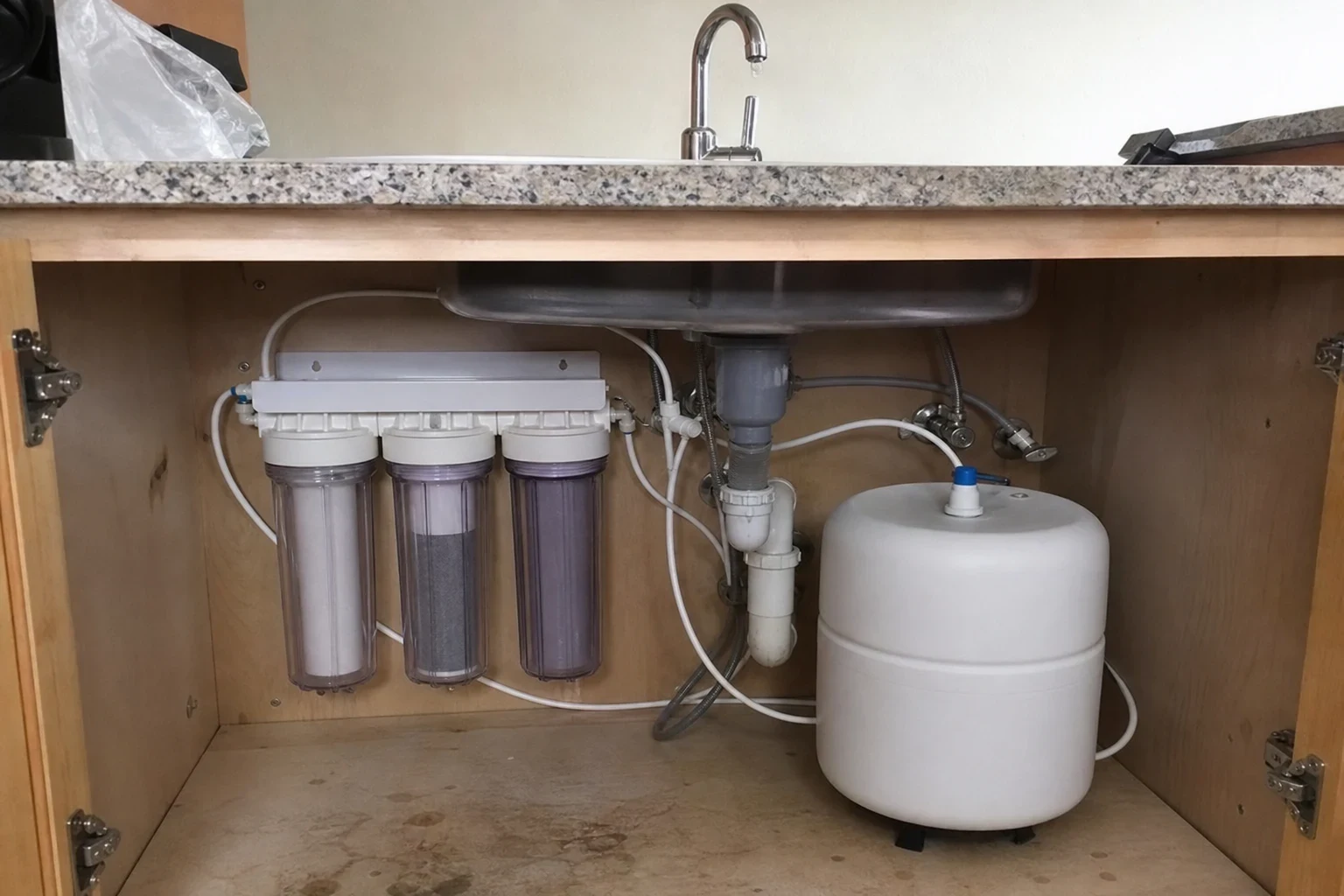
Find out what your water actually needs
We'll test your hardness and give you a straight answer on whether a softener is worth it. If it is, you'll get options and a written estimate before any work starts.