ServicesFilter replacement and maintenance
Filter Replacement and Maintenance in Dallas
Filters work until they don't. We change cartridges, membranes and seals on the systems already in your home, check the housings for wear, and tell you which filter material fits your water and budget. You get good flow back and a plain schedule for the next change.
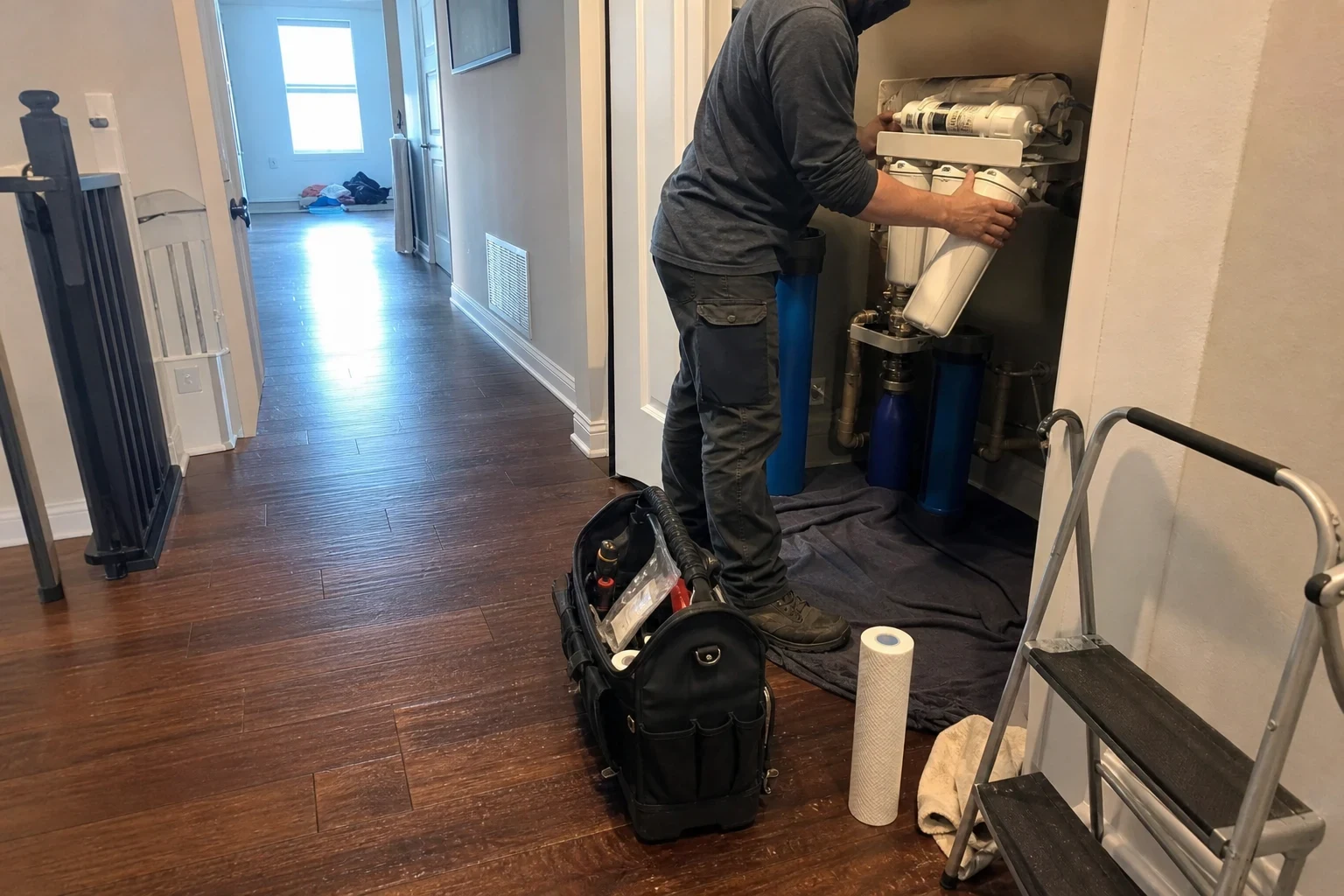
What a filter change really involves
Every filter in your home gets used up. Sediment cartridges fill with grit. Carbon wears out as it pulls chlorine from the water. A reverse osmosis membrane slowly fouls. None of it fails loudly. Flow drops, the old taste creeps back, and you stop noticing.
We service under-sink reverse osmosis units, whole-house carbon tanks and cartridge housings, iron and sediment filters, and softeners across Dallas and nearby towns like Richardson, Irving and Garland. We don't just drop in the cheapest cartridge. Replacement filters come in different materials, and that choice changes how long a filter lasts and what it catches. We explain the options and you pick.
If a system is undersized or past saving, we say so. Sometimes water testing is the smarter first step before you spend money on new media.
What we handle on a service visit
- Sediment cartridge swaps
- Spun polypropylene is cheap and traps fine grit through its whole depth. Pleated polyester costs more up front, holds more dirt before flow drops, and can be rinsed. We match the micron rating to what your water carries so the filter doesn't clog in a month.
- Carbon cartridges and media
- Carbon block catches more and handles taste and odor well, but slows flow as it loads up. Granular carbon flows freely and suits whole-house tanks. Catalytic carbon is the one to ask about if your water is treated with chloramine instead of chlorine.
- Reverse osmosis membranes
- Most home membranes are thin-film composite. They last longer when the pre-filters in front of them are changed on time. We check output and the storage tank's air pressure before we call a membrane done.
- O-rings, housings and seals
- We look over each housing for hairline cracks and replace flattened O-rings. A light coat of food-grade silicone grease helps the seal seat and makes the next change easier. A cracked housing is where most slow leaks under a sink start.
- Sanitizing and flushing
- On RO units we sanitize the lines and tank during a full service. New carbon gets flushed until the fine dust runs clear, so your first glass doesn't come out gray.
- Softener and iron filter checks
- We check the brine tank for salt bridges, look at the control valve settings, and backwash iron and sediment tanks to confirm the media is still working.
Signs your filters are due
Slower flow at the faucet
The RO tap takes longer to fill a glass, or pressure drops after a whole-house filter. A loaded cartridge is the usual cause.
The taste or smell is back
A chlorine or pool-water smell means the carbon is spent. Carbon gives no warning. It just stops working.
Brown or slimy cartridges
If you pulled a cartridge and found it dark, or coated in a slick film, it was overdue.
Drips under the sink
A small leak around a housing often comes from a dried-out O-ring or a housing that was cranked down too tight.
No date on the housing
Most people can't remember the last change. If nobody wrote it down, it's a good time for a check.
What moves the price of filter service
You get a written, line-item estimate before we start. Most of the cost is the filters themselves, so the materials you choose matter more than anything else. We'll show you the trade-off between a cheaper cartridge changed often and a better one that lasts longer.
Number of stages
A single sediment filter is a quick swap. A five-stage RO unit with a membrane and post-filter needs more parts and more time.
Filter material
Spun poly costs less than pleated. Carbon block costs more than granular. Catalytic carbon and specialty iron media sit at the higher end.
Proprietary or standard sizes
Some systems only take the maker's own cartridges. Others use standard 10-inch or 20-inch housings, which open up more choices.
Condition of the system
Cracked housings, a waterlogged RO tank or a stuck valve add parts. We show you what we found before replacing anything extra.
How a maintenance visit runs
- 1
A short phone talk first
Tell us what system you have, the brand if you know it, and roughly when the filters were last swapped. That way we show up with the right cartridges and seals.
- 2
Shut off and inspect
We close the supply valve, relieve the pressure and open each housing. We look at what comes out, because a spent cartridge shows what your water is carrying.
- 3
Replace and reseal
New filters go in, O-rings get checked or replaced, and housings are snugged with the proper wrench instead of forced.
- 4
Flush, test and clean up
We run water through, check every joint for leaks and confirm flow. Then we wipe out the cabinet, take the old cartridges with us, and write the date on each housing.
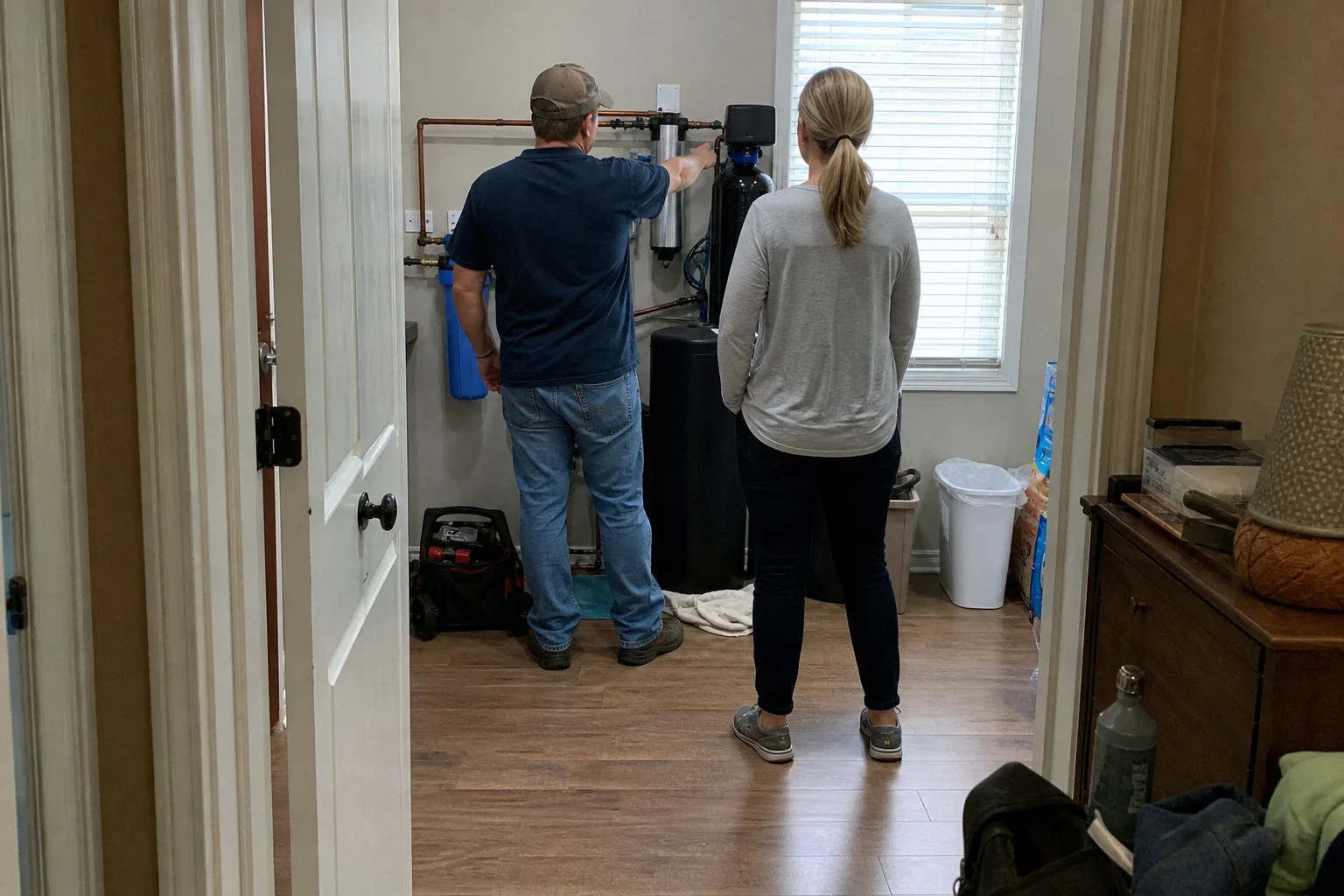
Filter service questions
How often should my filters be changed?
No one number fits every home. It depends on the filter type and how much water your household uses. Roughly speaking, RO pre-filters tend to last six to twelve months and the membrane a few years. Whole-house cartridges can fill up sooner in homes with lots of showers and laundry. Once we see your old cartridges on the first visit, we set a schedule from them.
Can I swap the filters on my own?
Yes, plenty of cartridge systems are designed for that. Common slip-ups are pinched O-rings, housings tightened too hard and not flushing new carbon. If you want to handle it yourself, just ask and we will show you how while we are there.
Do you service systems installed by someone else?
Usually, yes. We handle common brands and standard 10-inch or 20-inch housings all the time, whoever installed them. Some makers require their own cartridges, so tell us the brand when you call. We make sure we can get the right part before we come out.
Is it fine to use cheaper generic cartridges?
In some cases. A generic sediment filter in a standard size often works fine. Carbon and RO membranes are different, because material and fit count for more, and a bad seal lets water bypass the filter. We will point out where saving is sensible and where it is not.
Why does my water taste wrong after a filter change?
Fresh carbon has to be fully flushed first. If the taste stays, the filter may be the wrong match for your water. A water test gives you a clear answer so you are not guessing with one cartridge after another.
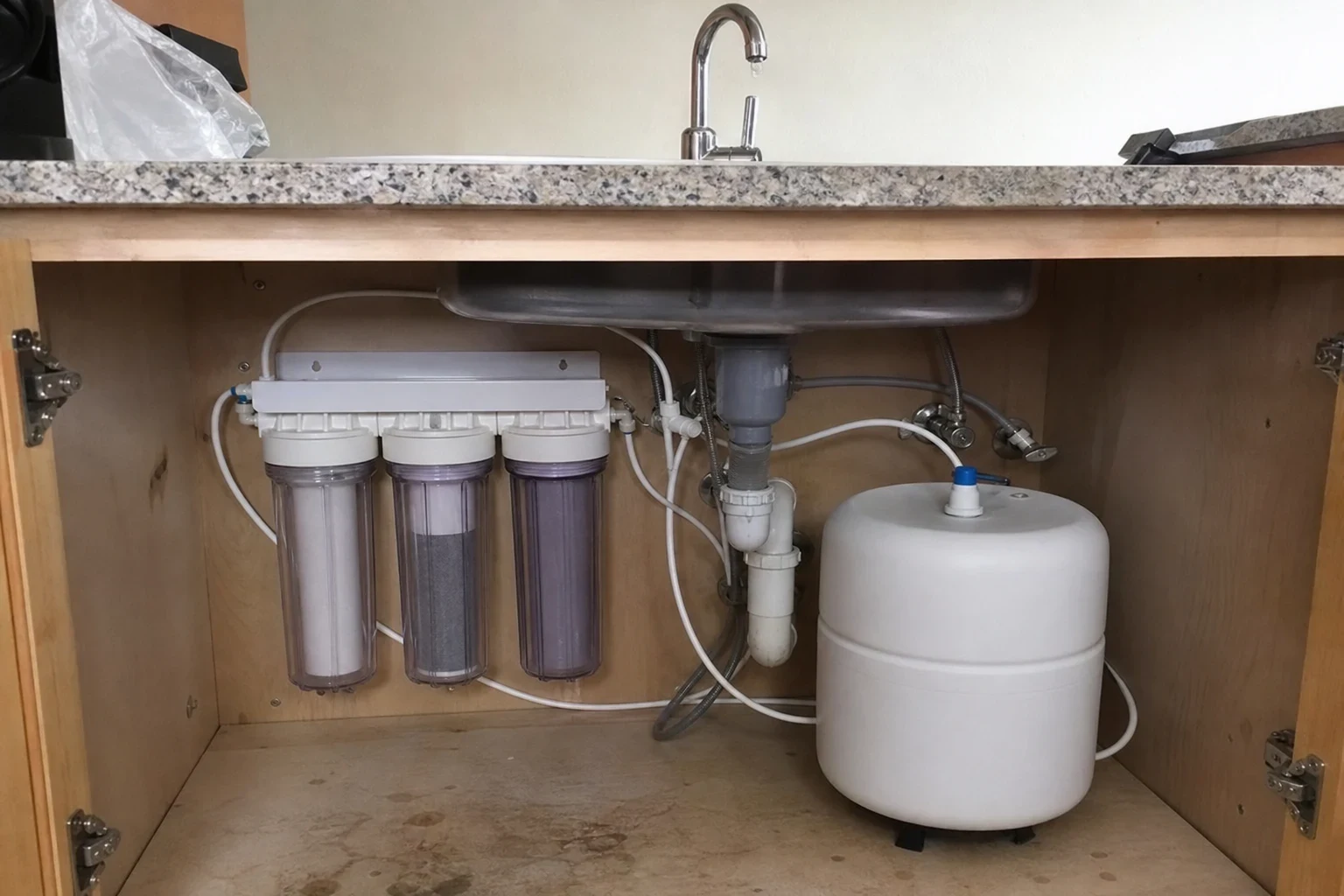
Get your filters back on schedule
Give us the make of your system and a rough idea of the last filter swap. We'll show up with matching cartridges and seals and tell you straight what we see under the sink.