ServicesIron and sediment filtration
Iron and Sediment Filtration in Dallas
Rust rings in the tub, sand in the aerators, laundry that comes out dingy. We test your water first, then pick the filter material that fits what we find. That could be a simple cartridge or a self-cleaning tank. You get clear water and a plain reason for every part we install.
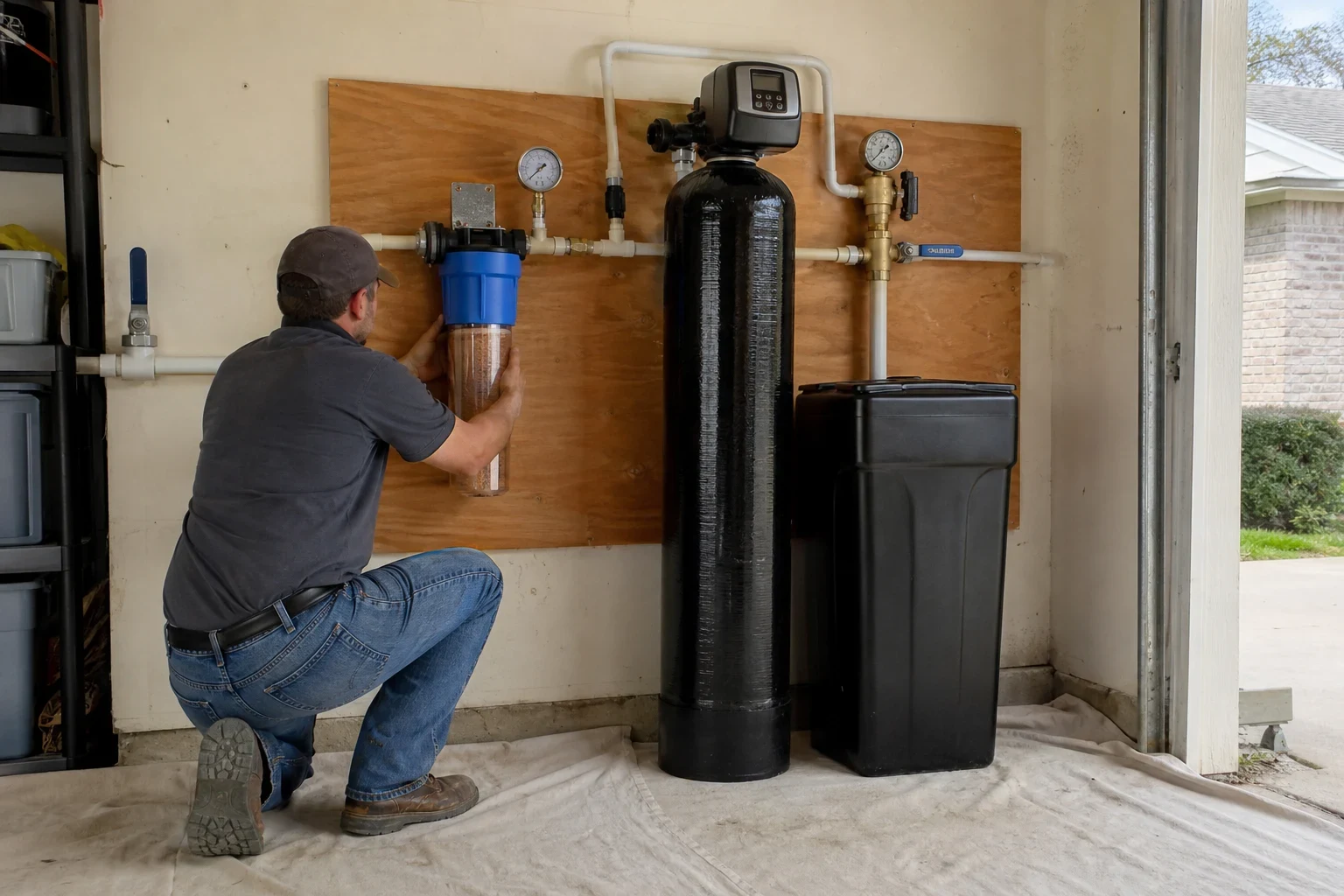
What this filter does and when it makes sense
Iron and sediment filtration catches what you can see and taste: sand, grit, flakes of pipe scale and the rust that leaves orange marks on porcelain. City water is treated before it reaches your meter. When we find rust in a Dallas home, it is often coming from older galvanized pipe inside the walls, a water heater full of sediment, or a private well.
The fix depends on the kind of iron. Rust flakes and grit are solid, so a cartridge can strain them out. Dissolved iron is clear when it leaves the tap and turns orange later, so it slips right through a cartridge. That takes an oxidizing media that turns the iron solid and then traps it. A test tells us which one you have, and how much.
If the test shows your real complaint is chlorine taste, not rust, we will tell you that and talk about whole-house carbon filtration instead.
What the job includes
- Spun polypropylene cartridges
- Fine grit gets caught all the way through the filter, not only on its outer layer. Replacements are cheap. The downside is that they clog sooner when the water carries heavy sediment.
- Pleated and string-wound options
- Pleated cartridges offer more surface area and can be rinsed and reused several times before replacement. String-wound cartridges do well with larger scale flakes. We often put a coarse cartridge in front of a finer one, for example 50 micron followed by 5 micron, so the fine stage lasts longer than a few weeks.
- Backwashing iron tanks
- Dissolved iron calls for a tall tank filled with oxidizing media like Birm, manganese greensand or catalytic carbon. All of them have limits. Birm depends on enough oxygen in the water and a suitable pH, and greensand has to be regenerated from time to time. The tank rinses itself on a timer, so a drain and an outlet must be close by.
- Bypass valve and pressure gauges
- Each system includes a bypass, so your water stays on while a filter is changed. Gauges on both sides of the housing show when a cartridge is filling up, so you replace it when it needs it rather than by guess.
- Careful placement and cleanup
- We install the system close to where the main line comes into the house. When it has to sit outdoors, we insulate it, because Dallas sees an occasional hard freeze. We lay drop cloths before starting and take away packaging and old pipe when we finish.
Signs you may need iron or sediment filtration
Orange or brown stains
Rings in toilets, streaks in tubs and yellowed white laundry point to iron. Bleach makes iron stains worse, not better.
Grit in faucet screens
Unscrew an aerator. Sand, black specks or rusty flakes mean sediment is moving through your pipes.
Metallic taste
Water that tastes like a penny, or coffee that comes out dark and bitter, often has iron in it.
Slow fixtures
Pressure that drops at one or two faucets, or a showerhead that keeps clogging, can come from scale and grit packing the small openings.
Brown water after the tap sits
If the first glass in the morning is tinted and then clears, older pipe may be shedding rust overnight.
What moves the price
Price comes down to what the test finds and what your plumbing looks like. A single cartridge housing is a small job. A tank that treats dissolved iron is a bigger one. We give you the full number in writing before we start.
Cartridge or tank
Cartridge housings are simple to install. Backwashing tanks cost more up front, though they skip most cartridge buying later.
How much iron and grit
Heavy loads may need two stages or a larger tank. Light loads often need one housing.
Access and pipe type
Tight spaces, a main line inside a finished wall or galvanized pipe that needs new fittings all add time.
Drain and power
A self-cleaning tank needs a drain and an outlet. If neither is close, we have to run them.
Ongoing media
Cartridges get replaced and some media needs regeneration. We tell you what that looks like over a year so it is not a surprise.
How the work goes
- 1
Test the water
We check iron, sediment, pH and hardness at your tap. If your home is on a well or the results look odd, we can send a sample to a lab. You see the numbers.
- 2
Pick the material
We explain which media fits your results and what it will ask of you in upkeep. Nothing goes on the calendar until you have the price on paper, with each part and the labor broken out on its own line.
- 3
Install day
We shut off the water, cut the system into the main line, add the bypass and gauges, and flush the new filter until it runs clear. Most cartridge setups are done in part of a day. A backwashing tank takes longer because of the drain line.
- 4
Walkthrough
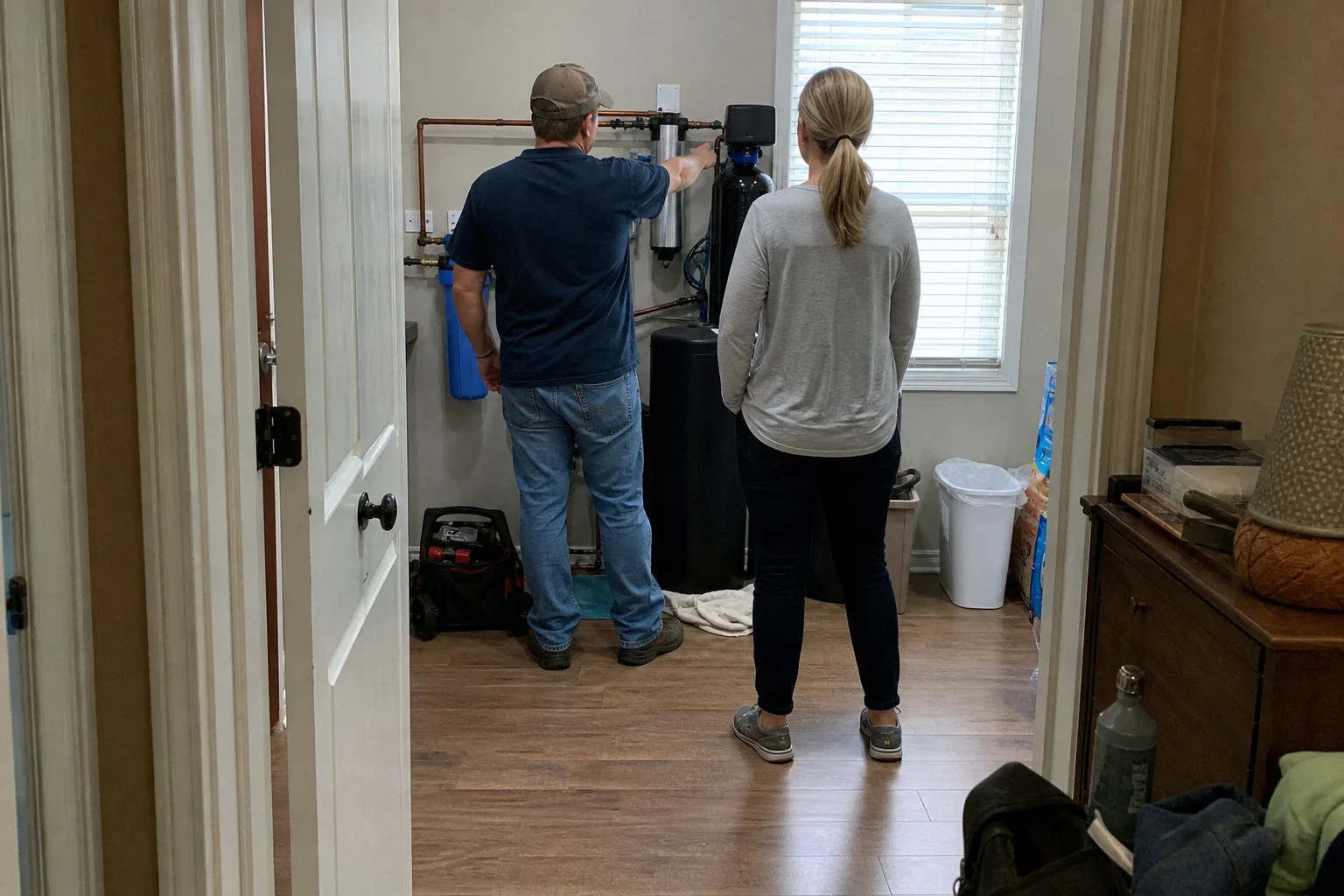
We show you how to use the bypass, read the gauges and swap a cartridge. If you would rather not handle it, our filter replacement and maintenance visits cover that.
Iron and sediment filtration questions
Will a sediment filter remove iron?
Only the solid kind, like rust flakes. Dissolved iron is too small and passes right through. For that you need an oxidizing media that turns it solid first. A test tells us which you have.
How often will I change cartridges?
It depends on how much grit your water carries. Some homes go most of a year, others a couple of months. The pressure gauges show you when the drop gets too big.
Do I need a water softener too?
Usually not. Iron and hardness are different problems. We only suggest a softener after a hardness test shows it is worth it.
Will the filter lower my water pressure?
A properly sized system barely changes it. A clogged cartridge will, which is why we install gauges. When pressure drops, it is time for a new cartridge.
Can it fix rust coming from my own pipes?
A filter at the main stops sediment from the supply side. Rust shed by pipes downstream of the filter can still show up. If your galvanized pipe is the source, we will tell you so you can weigh a plumber's repair against filtering.
Find out what is staining your water
We test first and explain the filter options in plain terms. You decide with real numbers in hand.