ServicesWater testing
Water Testing in Dallas
We check what flows from your kitchen faucet and look over the pipes that bring it in. You get plain answers on what we found, which filter material fits the problem, and when a filter isn't needed at all.
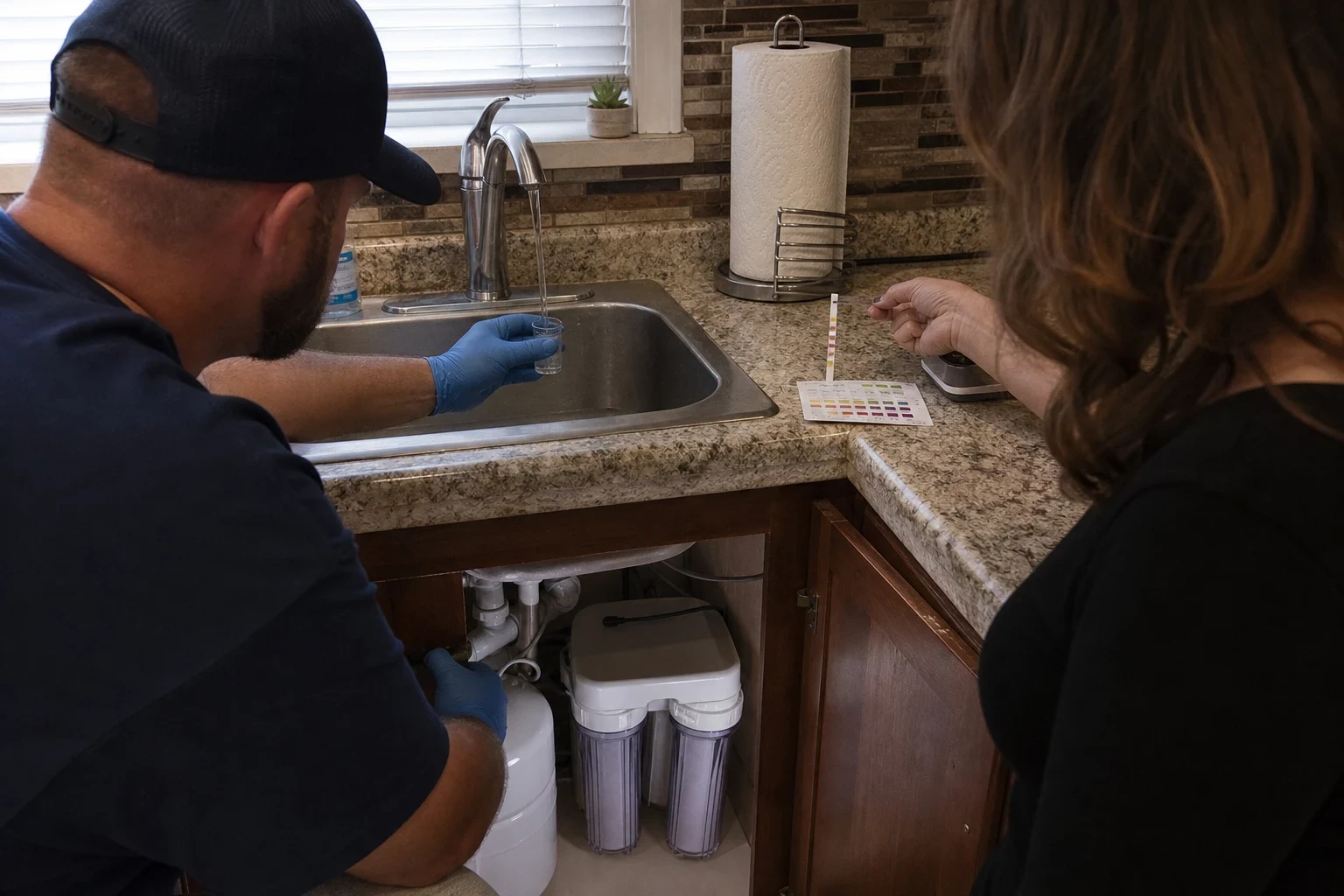
What a water test tells you
Dallas city water meets federal standards at the plant. The trip to your faucet is another matter. Water can pick up metals from your home's own plumbing along the way, and the disinfectant added during treatment leaves a taste some people dislike.
A test sorts that out. We check hardness, iron, chlorine level, pH and total dissolved solids at the tap. When lead or other metals are the question, we send a sample to an independent lab. On a private well, a lab panel is the place to start.
The results decide the material. Activated carbon handles chlorine taste and odor. A reverse osmosis membrane handles dissolved metals. Ion-exchange resin handles hardness. Each one does a different job, so knowing your problem keeps you from paying for the wrong one.
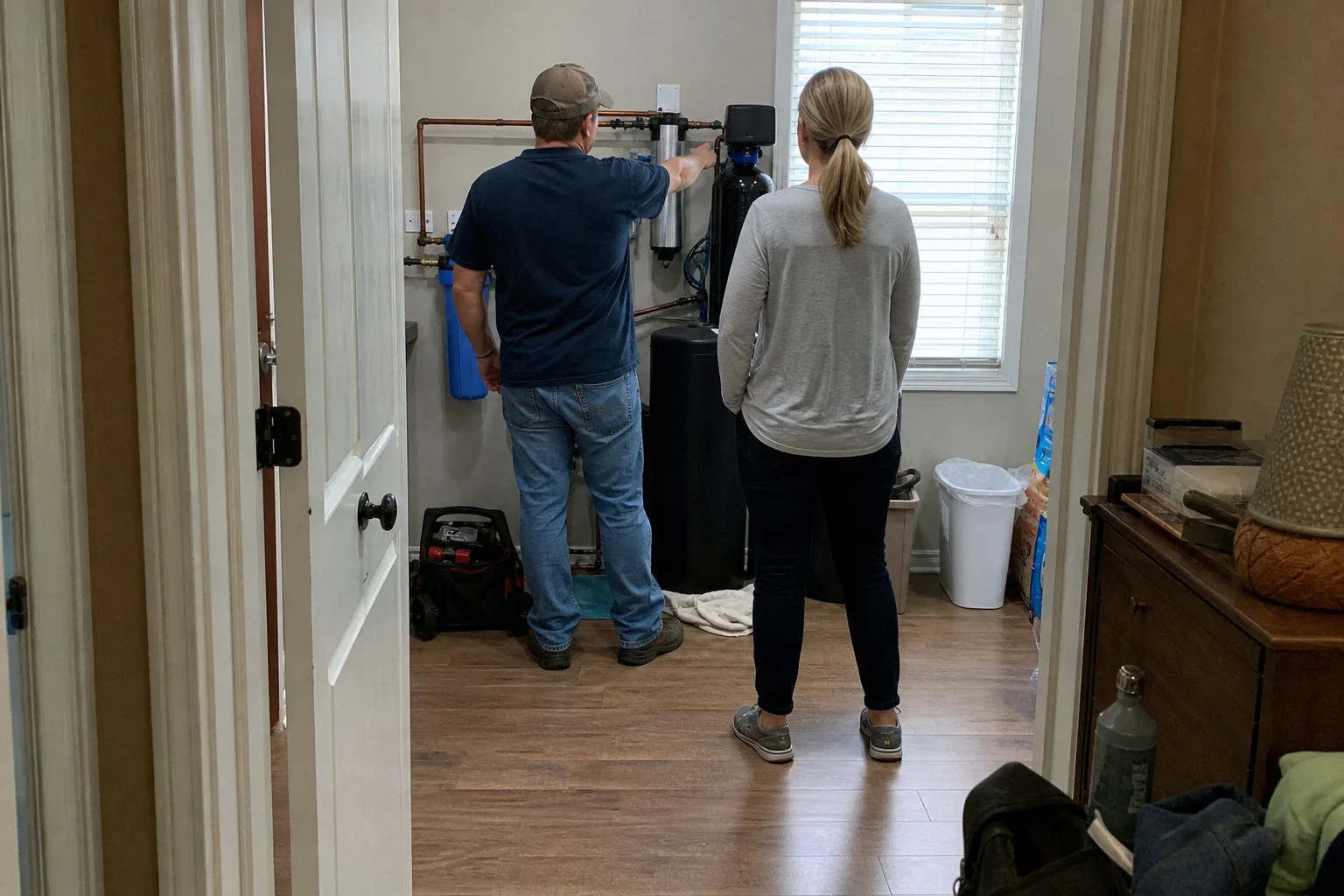
What's included in a water test
- 01
Readings at the kitchen tap
We test cold water for hardness, chlorine, pH, iron and total dissolved solids. You watch the readings as we take them.
- 02
A look at your pipe materials
We check what your pipes are made of wherever they're visible: copper, galvanized steel, CPVC or PEX. Galvanized lines rust from the inside and can release iron and trapped lead. Copper joints soldered before the 1986 lead ban can contain lead.
- 03
Independent lab samples
When lead, copper, bacteria or a well is involved, we collect a sample and send it to an outside lab. A lab result is far more precise than a test strip. We go over it with you when it comes back.
- 04
Hardness in grains per gallon
Any softener talk should start with a number. We give you hardness in grains per gallon so you can judge whether a softener is worth it.
- 05
Results in writing
You get every reading on paper with a short note on what it means. If your water is fine, we write that down too.
Questions about Water testing?
Call(214) 225-7594Signs it's time to test your water
A chlorine or pool smell
A strong bleach smell from the tap is the disinfectant the city adds. It's not a safety problem, but a reading tells us how much carbon it takes to remove it.
Rust stains in sinks or toilets
Orange or brown rings usually mean iron. That can come from old galvanized pipe corroding inside your walls.
White crust on faucets
Chalky buildup on fixtures and spots on glasses point to hardness. A test shows whether it's mild or worth treating.
Original plumbing in an older house
If your home was built before the mid-1980s and the pipes were never replaced, it's worth checking for lead and copper.
A metallic or odd taste
Metal, earthy or salty tastes have different causes. Guessing wastes money; a test narrows it down.
You're about to buy a filter
Test before you buy. It's the easiest way to match the equipment to the water you actually have.
How a test visit goes
- 1
A short phone call
We ask how old your home is, if you're on city water or a well, and what you've noticed. That tells us what to bring and whether a lab sample makes sense.
- 2
Testing at your home
We run the cold tap, take readings and check the pipes under the sink, at the water heater and near the main shutoff. Most visits are quick and we leave things as we found them.
- 3
Lab sample if needed
For lead, we collect the very first water out of the faucet in the morning, after it has sat still in your plumbing for several hours. That's when metals show up most. We'll explain how to leave the tap alone the night before.
- 4
Results and your options
We walk you through each number and what it means. Then we lay out the material that fits, such as carbon, a reverse osmosis membrane, a sediment cartridge or softener resin, or tell you to leave it alone.
What affects the cost of water testing
Simple readings at your sink sit at the low end. An independent lab panel adds the lab's own fee on top. You hear the price of each option during the phone call, before anyone takes a sample, and you decide how far to go.
- On-site readings or lab work
- Readings we take at your sink are the simplest. Sending samples to an independent lab adds the lab's fee.
- How many things we test for
- A hardness and chlorine check is narrow. A panel for lead, copper, bacteria and other metals covers more ground and costs more.
- City water or a private well
- Well water needs a broader lab panel because nobody else is testing it for you. City water usually needs fewer checks.
- Retesting after a fix
- If you install a filter or replace pipe, a follow-up test confirms it worked. That's a separate, smaller job.
Water testing questions
Isn't Dallas city water already safe?
Yes, the city's water meets federal standards at the plant. Testing is about what happens after that, inside your home's pipes, and about taste. Most of what we find is a comfort issue, not a health one.
Is a store-bought test kit good enough?
A kit from the hardware store gives you a ballpark on hardness and chlorine, and that has its uses. Its color chart can't pick up lead or other metals at the small amounts that matter. When those are the concern, we send a sample to a lab instead.
Will you try to sell me a filter after the test?
We'll tell you what the numbers say. If they point to a problem, we explain which material handles it and why. If your water is fine, we tell you that and you keep your money.
How do I know if my home has lead in the plumbing?
Start with the age of the house and its pipes. Copper lines put in before 1986 were often joined with solder that contains lead, and older galvanized pipe can hold lead picked up from earlier connections. A morning lab sample gives you a real answer instead of a guess.
Do I need a water softener?
Only if your hardness number says so. We test first and give you the reading in grains per gallon. Many homes don't need one, and we'll say so when that's the case.
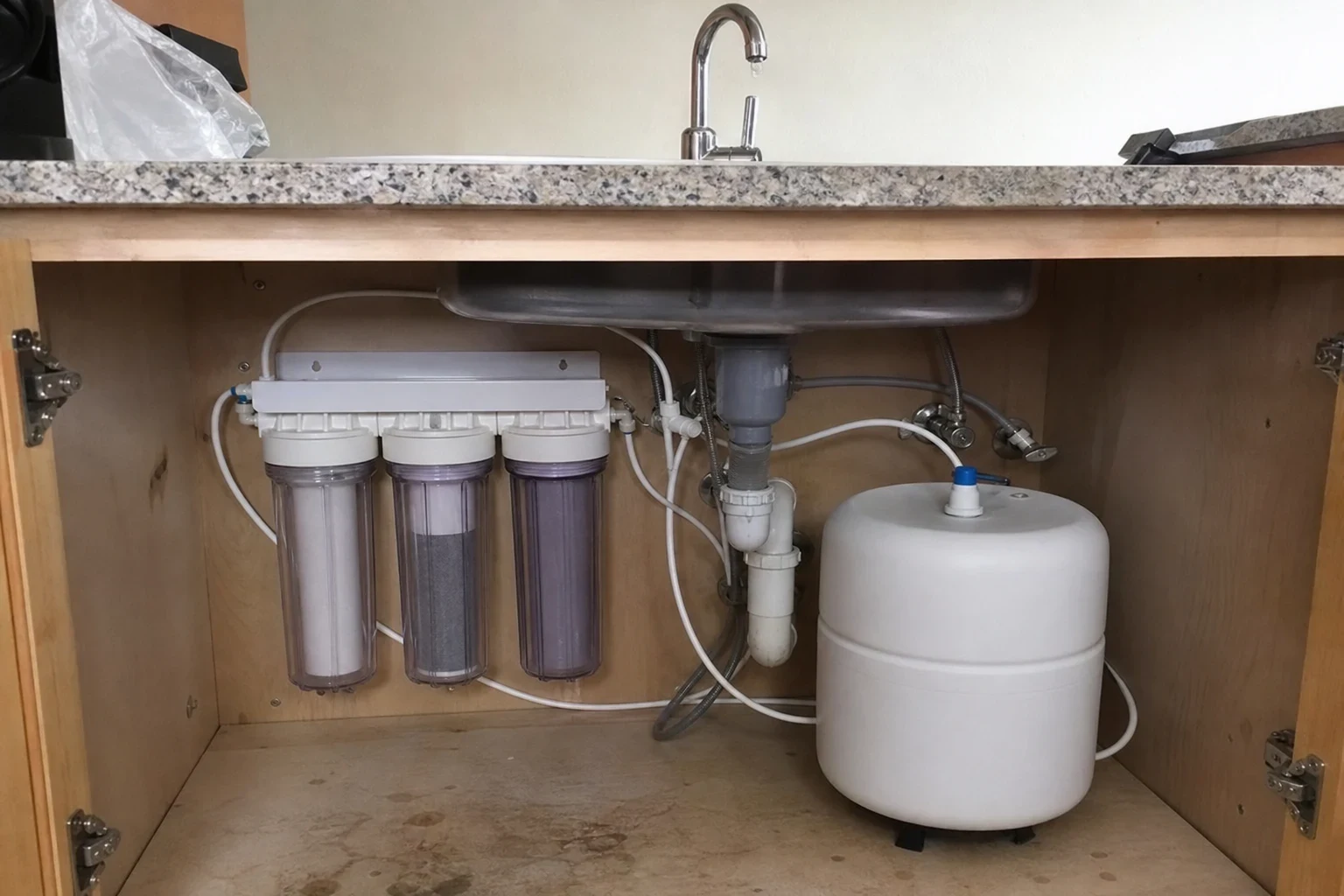
Find out what's in your water first
A test takes the guessing out of buying a filter. Give us a call, tell us what you've noticed, and we'll set up a visit to your home.