ServicesUnder-sink reverse osmosis
Under-Sink Reverse Osmosis in Dallas
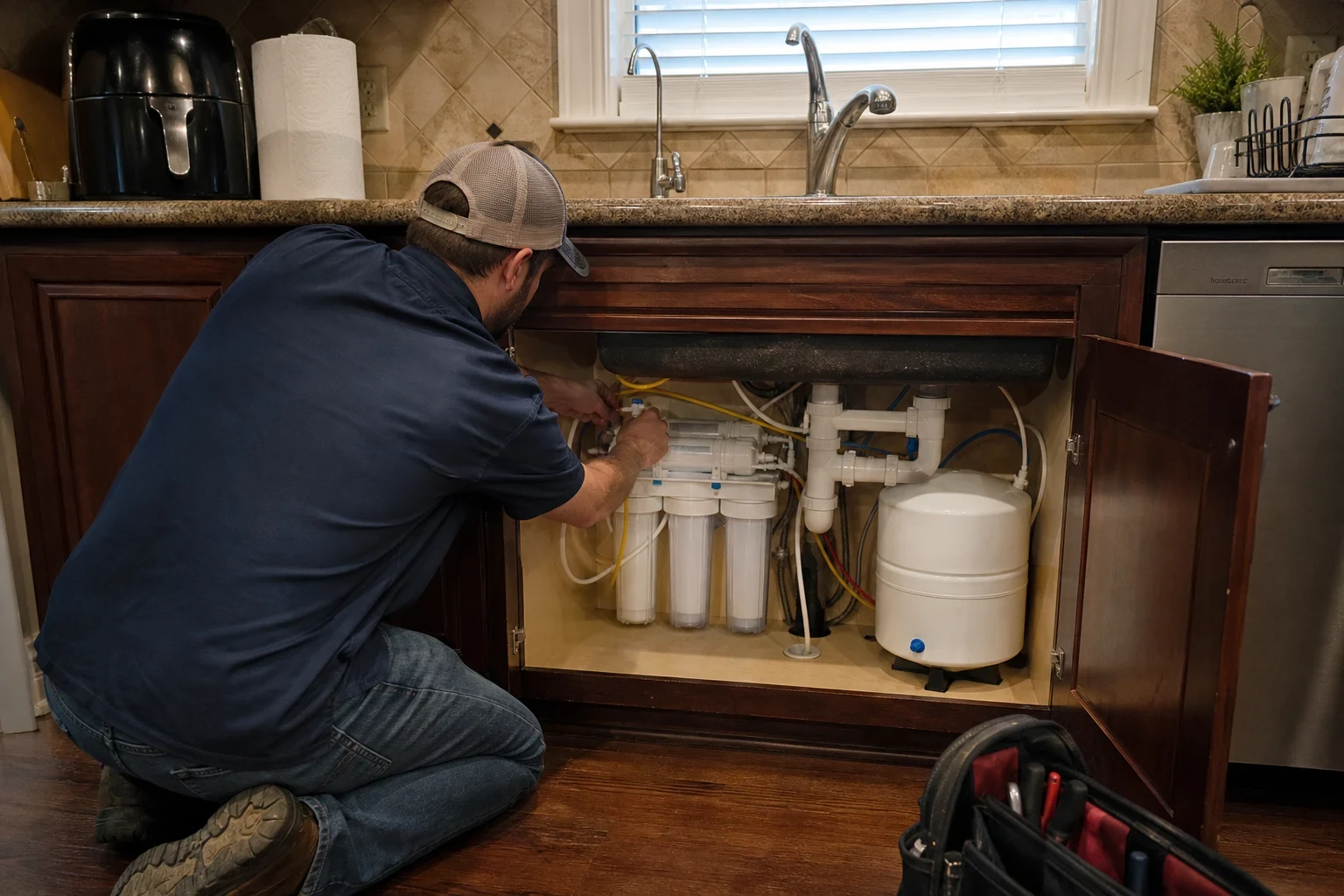
Reverse osmosis gives your home a separate drinking water tap, fed by a compact unit tucked in the cabinet below the sink. Before anything goes in, we explain each part, from the membrane to the tank to the faucet, so you know what you are paying for and why.
What an under-sink RO system does
Reverse osmosis forces tap water through a membrane with pores far smaller than a hair. Water molecules pass. Most dissolved solids, metals such as lead, and a long list of trace contaminants stay behind and get rinsed away to the drain. The filtered water collects in a small tank and comes out of its own spout next to your main faucet.
This system only treats one tap. Showers, laundry and the dishwasher still get regular water, which keeps the unit small and the yearly filter cost low. If chlorine smell bothers you in every room, whole-house carbon filtration fits better, and some homes end up with both.
RO suits a home with older plumbing, a family hauling in cases of bottled water, or anyone who wants extra margin at the kitchen tap. If you have no idea what your water carries, our water testing service is the place to begin. The results show plainly whether RO is worth it for your home or whether something simpler will do.
The parts, and the choices behind them
Sediment prefilter
A spun polypropylene cartridge catches sand, rust flakes and grit before they reach anything delicate. It is cheap and simple, and it protects the more expensive parts downstream.
Carbon prefilter: block or granular
Carbon removes chlorine, which would otherwise eat a thin-film membrane. A carbon block filters more evenly than loose granular carbon. Where the city uses chloramine, we use catalytic carbon, since standard carbon handles it poorly.
The membrane: TFC vs. CTA
Most systems use a thin-film composite (TFC) membrane. It rejects more and lasts longer but needs that carbon stage in front of it. Cellulose triacetate (CTA) tolerates chlorine but rejects less and can break down over time. We almost always recommend TFC and tell you why.
Storage tank or tankless
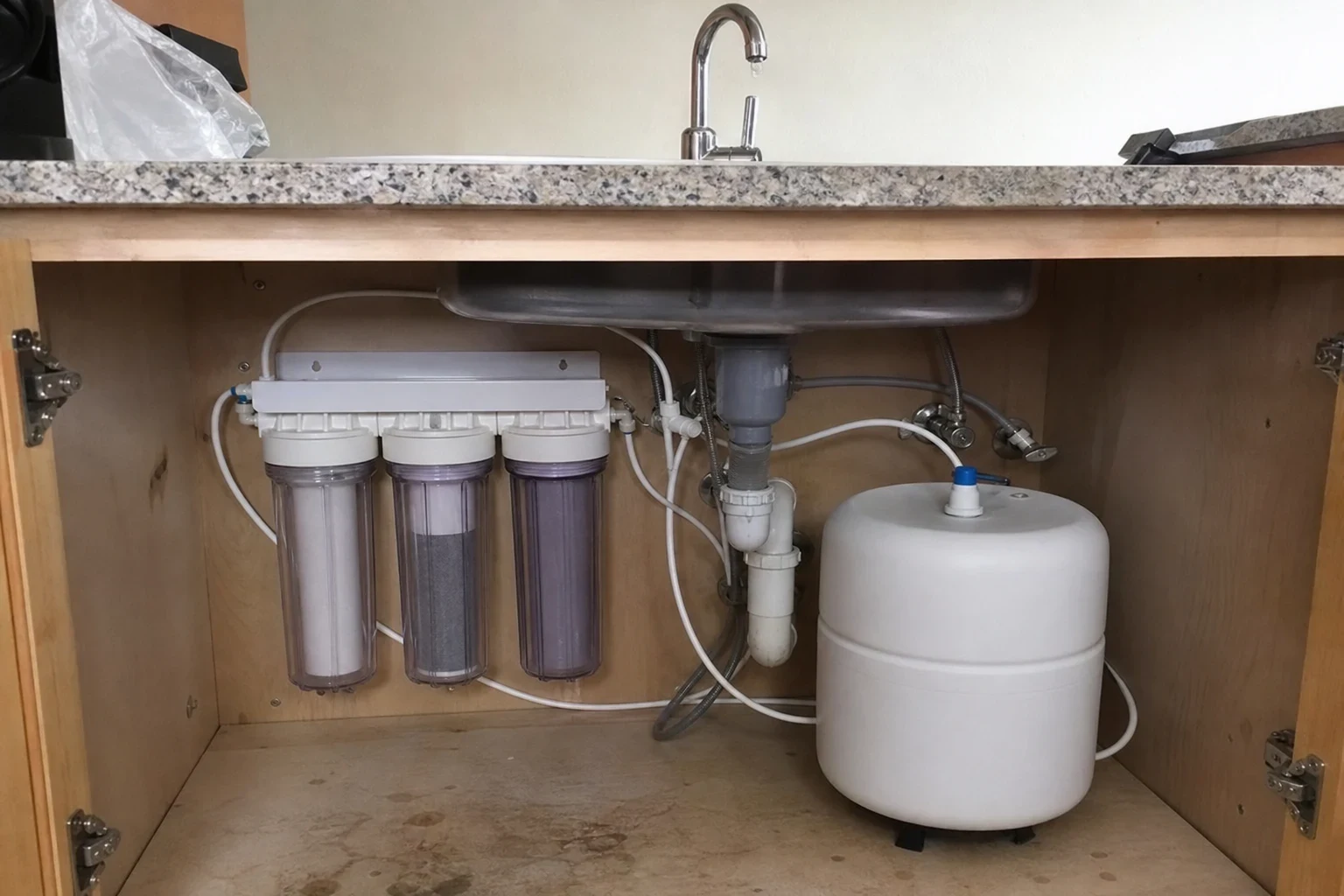
A standard tank is steel or plastic with a rubber bladder inside, holding a few gallons ready to pour. Tankless units filter on demand and free up cabinet space, but they need power and cost more. We measure your cabinet before you pick.
Faucet, tubing and drain hookup
The dedicated faucet comes in a few finishes to match your sink. We run food-grade polyethylene tubing and a proper drain saddle so rejected water leaves cleanly. An optional line can feed your fridge or ice maker.
Optional remineralizing stage
RO water tastes flat to some people. A small calcite cartridge adds back a little calcium and magnesium. It is a taste choice, not a health need.
Signs an RO system is worth a look
Your home has older pipes
Lead usually comes from household plumbing and solder, not the city main. Homes built before the late 1980s are worth checking. RO is one of the few under-sink options that reliably cuts lead.
You buy bottled water every week
Cases of water add up and fill the recycling bin. An RO faucet gives you water you are happy to drink straight from the tap.
Coffee, tea or ice tastes off
Dissolved minerals and disinfectant change the taste of anything you brew. RO water is neutral, so the drink tastes like the drink.
A test showed something you want lower
If a lab result came back with nitrates, arsenic, high total dissolved solids or other items you would rather not drink, RO handles a broad range of them at one tap.
Your pitcher filter is not keeping up
Pitchers do a decent job on chlorine taste and little else. If you want more than that, it is time to step up.
How install day goes
- 1
Phone conversation first
We ask about your water, your sink and what is bothering you. If testing would help, we say so before we talk about equipment.
- 2
Check pressure and cabinet space
RO needs decent water pressure to work well. We check yours, and if it runs low we add a small booster pump. We also measure under the sink for the tank, filters and any disposal or trash pull-out.
- 3
Mount, drill and connect
We mount the filter housings, set the tank, and use an existing sprayer hole or drill the countertop for the faucet. Stone counters get a proper bit and a slow hand. Then we connect the cold supply, drain and any fridge line.
- 4
Flush, leak check and walkthrough
New filters and membranes need flushing before the water is ready. We check every fitting for drips, clean up, and show you which cartridge is which and when each one gets changed.
What moves the price
We price the system you need, not the biggest one on the shelf. The final number comes down to the parts you pick and how your kitchen is set up. You get a clear breakdown by phone before any work is booked.
- Tank or tankless
- A standard tank system costs less up front. Tankless units cost more but save space and waste less water.
- Number of stages
- A basic four-stage system covers most homes. Adding catalytic carbon, a remineralizer or UV raises the cost of the unit and of yearly filters.
- Countertop and access
- Using an existing sprayer hole is quick. Drilling granite or quartz takes more time and care, and so does a crowded cabinet.
- Pressure and extra lines
- A booster pump for low pressure, or a run to the fridge or ice maker, adds parts and labor.
Common reverse osmosis questions
Something not covered here? (214) 225-7594
How much water goes to the drain with RO?
Older units might send four gallons or more down the drain for each gallon of filtered water. Current designs and pumps lower that a great deal. Strong water pressure helps too, which is why we test yours before we install.
How long will the cartridges last?
Expect to replace the sediment and carbon cartridges once or twice a year, or more if your family drinks a lot of water. The membrane lasts longer, often two to three years, provided the cartridges ahead of it are changed on time. Our filter replacement and maintenance service can stay on that schedule for you.
Will RO strip out minerals my body needs?
It takes out most of them. For most people, calcium and magnesium come from food rather than tap water. If you like the taste of mineral water, a remineralizing cartridge puts a little back.
Can it fit alongside my garbage disposal?
In most kitchens, yes. The tank can go off to the side and the filters attach to the cabinet wall. We take measurements first, so install day holds no surprises.
Does that mean city water is unsafe?
No. The city treats and tests its water. Issues tend to come from the plumbing inside a house, or from taste. RO adds a margin at the tap you drink from; it is not a fix for an emergency.
Want better water at the kitchen sink?
Tell us about your sink, your pipes and what you want out of your water. We will walk you through the parts and give you an honest recommendation.